Suzanne Holt

Norwex Executive Vice President Sales Leader
Independent Sales Consultant
About Me
Click to shop at Suzanne Holt's Norwex Shop

Norwex Monthly Specials

Are your antibacterial wipes helping or hurting?

Antibacterial WipesAntibacterial wipes are very common these days, and can be found almost anywhere.

Your favorite grocery store is most likely dispensing them for wiping down carts, your local gym may have them on hand for cleaning exercise equipment, and your school may be handing them to schoolchildren to scrub their tables and chairs. I was shocked to find that our local elementary school requested that each child bring antibacterial wipes as a “school supply.”  These “convenient” products have hidden hazards that should worry us, in addition to the fact that they are disposable, thus creating throwaway garbage.

What are they made from?
The most common ingredients present in these products are quaternary ammonium compounds, or “quats” for short, and chemicals such as alky dimethyl benzyl ammonium chloride and benzalkonium chloride. The American Medical Association (AMA) discourages manufacturers use of antibacterial compounds in consumer products as they can contribute to the development of antibiotic resistant bacteria.   Additionally, the Association of Occupational and Environmental Clinics, a leading international organization on asthma, considers these harmful chemical compounds to be what they call “asthmagens” that trigger asthma attacks in people even if they haven’t presented with the illnesses previously.  Actual studies revealed that the multitude of fragrances emitted by antibacterial wipes are composed of untested chemicals like phthalates and synthetic musks which are considered to be hormone disruptors and whose use can  lead to hormonal disorders.

Reports from studies organized in the United Kingdom stated that antibacterial wipes commonly used in hospitals to kill otherwise harmful infections were actually responsible for the spreading of drug-resistant bacteria. The research was presented at a conference organized by an American Society of Microbiology in Boston, USA.  The discussion concentrated on bacteria such as methicillin-resistant staphylococcus aureus or MRSA and VRE, or Vancomycin-resistant Enterococcus, both which have been associated with outbreaks of hospital-acquired (nosocomial) infections.

Continue reading

Norwex Cleaning Paste is Elbow Grease in a Jar

When I first heard about Norwex Cleaning Paste, it was described to me as “elbow grease in a jar.”  Essentially…the cleaning paste makes so many everyday jobs easier!

The Norwex catalog describes Cleaning Paste as:  “An Environmentally friendly paste that cleans, polishes and protects chrome , stainless steel, aluminum, porcelain and similar surfaces in one application.  Comes as a solid.  Rub damp enviro cloth on product to create paste and apply to surface.  Safe for use on coffee pots, glasses and most foodware products.  Not for use on soft metals such as brass or silver.”Norwex Cleaning Paste Continue reading

May Norwex Hostess Specials

Norwex is an amazing company to host a home party for!

Your friends have SPRING CLEANING on their mind, and this is the perfect time to introduce them to these wonderful products that will help them SAVE TIME, SAVE MONEY, SAVE their HEALTH, and SAVE the Environment!! Invite them over to learn something NEW!

I am now offering home parties, Facebook Parties, Skype Parties, and online parties.   CONTACT ME to set up a party that works best for you!!

May 2013 Norwex Host Specials

Continue reading

With Norwex, Doing Laundry is Quicker, Easier, and Cheaper

Laundry has never been something that I “LOVE” to do, but Norwex absolutely makes it quicker, easier, and we save money!!

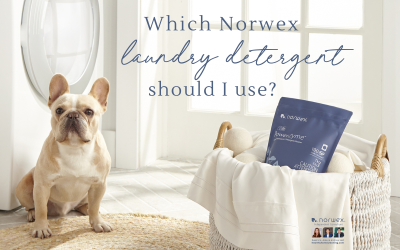
We have allergies in my home, so I love the fact that the Norwex Ultra Power Plus Laundry Detergent is filler-free and unscented, and will not leave residue in your clothing.  It has superior stain removing properties, whitens whites, brightens colored fabrics, and cuts through grease and dirt leaving clothes soft and fluffy.  One bag washes approximately 80 loads in a standard machine or 250+ loads in high efficiency.

Think your laundry detergent is natural or filler-free?  Check out this incredible photo.  The glass on the left shows an organic laundry detergent, the glass on the right shows another popular brand.  The middle glass is the Norwex Ultra Power Plus!  Norwex laundry detergent

Continue reading

Allergies and Asthma

Asthma-&-AllergiesAllergies and Asthma are two of the most common health problems today; they are chronic illnesses that require careful attention.  With the proper medication and careful monitoring people can have a comfortable life by avoiding the causes that can trigger an allergy or asthma attack.

In this article, you will know what comprises an allergy and asthma along with their symptoms, causes and medication.

What Is Allergy?

An allergy is a hypersensitivity disorder of the immune system. An allergic reaction occurs when a person’s immune system reacts to normally harmless substances in the environment. Particles in the air or pollens come in contact with lymphocytes or small white blood cells which carry out the functions of the immune system. People with no allergies react very little or not at all when exposed to the same conditions. The reason for the allergic is that the body releases certain chemicals as a response to the exposure; no one knows why people develop allergies however it can be a matter of genetics at times or can be caused from a previous illness. Allergies can happen at any time of your life, but are most common during young adulthood or early childhood years.

Different Types of Allergies

There are many different types of allergies that one can be affected with during his or her lifetime. One common type of allergy during spring is allergic rhinitis, or hay fever, which is an overreaction of the immune system to air borne substances that a person inhales.

Atopic Dermatitis is another one which usually affects children; also referred to as “eczema,” it can be similar to having an itchy rash. The skin can appear red, irritated, itchy, and sometimes develop small, fluid-filled bumps. The main cause of this allergy is usually from food or environmental factors.

Food allergies are a very common type of allergy.  Symptoms appearing on the skin may include hives, swelling and redness.  The mentioned symptoms can be seen within a few minutes of eating the food or sometimes after a few hours.  Sometimes the reaction can be more serious with nausea, vomiting, sneezing and can even be life-threatening.

Skin allergies are very common, however it can be difficult to determine the actual cause.  The main culprit of this allergy is usually a negative reaction from plants like poison ivy or certain types of food.  The symptoms can be anything from hives to various rashes and dry skin and are most common in children and young adults.  Identifying the cause of the skin irritation is essential to relieving the symptoms.

Continue reading