Suzanne Holt

Norwex Executive Vice President Sales Leader
Independent Sales Consultant
About Me
Click to shop at Suzanne Holt's Norwex Shop

Norwex Monthly Specials

Laundry

With Norwex, Doing Laundry is Quicker, Easier, and Cheaper

Laundry has never been something that I “LOVE” to do, but Norwex absolutely makes it quicker, easier, and we save money!!

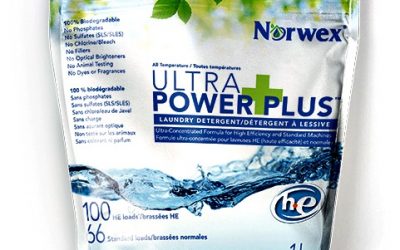
We have allergies in my home, so I love the fact that the Norwex Ultra Power Plus Laundry Detergent is filler-free and unscented, and will not leave residue in your clothing.  It has superior stain removing properties, whitens whites, brightens colored fabrics, and cuts through grease and dirt leaving clothes soft and fluffy.  One bag washes approximately 80 loads in a standard machine or 250+ loads in high efficiency.

Think your laundry detergent is natural or filler-free?  Check out this incredible photo.  The glass on the left shows an organic laundry detergent, the glass on the right shows another popular brand.  The middle glass is the Norwex Ultra Power Plus!  Norwex laundry detergent

Continue reading

Norwex Bath Towels that save Water, Time and Money

I love the Norwex Bath Towels!!  I really do.  This is the first Norwex item I use every morning and one of the last ones I use at night.  I even take my Norwex towels on trips; that is how great they are!

I recently was talking to a consultant on my team that lives in Texas, and she told me that she sells between five and ten of the Norwex bath towels at every party.  It was during our conversation that I realized that, while I love these towels, I have not been spending enough time sharing their wonderful qualities with others.

Let’s talk about some of the reasons I (and others) LOVE these towels.

#1:  THEY DON’T STINK!!  The Norwex bath towels are Antibac, which means they contain our unique antibacterial agent that is used for self-cleaning purposes.  The agent is designed to inhibit bacterial odor, mold and / or mildew growth within the product. Think about YOUR bath towels.  Would you say that ‘bacterial odor or mildew growth’ within the product are an issue?  I hear so often that people are irritated by stinky, smelly, mildewy bath towels.  I get that comment a lot when people are asking me how to eliminate odors in their laundry.  The best way to do it is to never experience the odor in the first place!

#2:  I DON’T LAUNDER THEM VERY OFTEN.  As I mentioned in “How to Clean Your Norwex Cloths“, I recommend that you launder your Norwex Antibac Bath Towel weekly.    If you are currently using cotton bath towels, you know this is far less frequently than you would launder a “regular” towel.  I don’t have to launder mine very often because the self-cleansing agent keeps it fresh and clean.

#3:  #1 and #2 SAVE ME TIME AND MONEY!!  In a family of four, we have a lot of dirty laundry.  The last thing I want to do is add to it by having several loads of towels to wash and dry each week.  Using the Norwex Antibac Bath Towels allows me to SKIP the loads of towels that we used to do each week.  Instead, I can just launder a few towels weekly, and they don’t even need a special load!!

#4:  THEY CONSERVE WATER.  I mentioned earlier that these towels are HOT sellers in Texas right now.  People are snapping them up in areas where they have been in a drought and are restricted on the amount of water they can use.  Having fewer loads of laundry each week makes a big difference in terms of not paying the stiff penalties for going over the allowed amount of water each week.

Does this sound too good to be true?  The Norwex towels really are amazing!  I challenge you to give them a one-week try and let me know what you think.  We have a 60 day satisfaction guarantee on all products, so if you aren’t satisfied…you can return them for a full refund.

To order the Norwex Antibac Bath Towel, click HERE or contact me at 651-402-0306.

Dirty Baseball Socks

Baseball season is upon us, and that means lots of nights out at the local baseball fields watching the boys learn teamwork and how to play the all-American pastime.  This year, our coaches have decided that the boys will play even if it is raining.  Tuesday night we had a great game (our team won!) at one of the local fields.  It was pouring rain the entire time.  My little guy came home soaked to the skin, and with socks covered in mud!

Summertime socks always seem to get especially dirty at our house, and baseball socks seem to be the worst.  What was once white is now brown and dingy looking.

You have a few options when it comes to really dirty socks.

  • You always have the option to drive down to your local store and buy more socks; throwing the disgustingly dirty ones in the trash.  This would be the most costly and least environmentally-friendly solution.
  • Some people tell me that they bleach their socks to keep them white.  I have previously posted some information on the dangers of bleach under Negative Impacts of Bleach, so that is not an option I would recommend either.  It’s hard on the clothes, and not friendly to either your health or the environment.
  • What we do (and what I recommend) is the following…  Take one full scoop of Norwex Ultra Power Plus Laundry Detergent and put it in a bucket of hot water.  Drop the dirty socks into the hot water, and soak them overnight.  The next day you can launder them with a regular load of laundry.  We have had good success with this method.

I love my boys, and I’m thrilled that they get their socks dirty.  Dirty socks mean they are outside being active and exploring the world.  I also love the fact that I know how to get these socks clean the “Norwex way.”

What is your biggest laundry challenge?  I would love to help you tackle it.

Using the Norwex Magnet Ball with a Water Softener

I have gotten a few questions lately about whether or not it would make sense to use the Norwex Magnet Ball if you already have a water softener.  The Magnet Ball prevents calcium molecules from building up in dishwashers and washing machines, resulting in softer water and requiring up to 50 – 70% less soap.

We have a water softener, a whole-house allergy filter, and we DO use the magnet ball in our dishwasher.  It reduced the amount of detergent we use by half, and it eliminated the need for a rinse aid.  We previously would get spotting on our glasses even with a rinse aid, and now our glasses have looked great since we began using the Norwex Magnet Ball.  It is a good idea to use a Norwex Enviro Cloth to clean out the middle of the ball about once a month.

The magnet ball should not be used in front-loading / High Efficiency washing machines and is meant to be used on the bottom rack of the dishwasher.  The magnet ball has a five year warranty.

Please continue to send me these wonderful questions about our products; I love hearing from you.  Comments are welcomed below; please share your experiences with the Norwex Magnet Ball.

Negative Impacts of Bleach

People have been whitening fabrics for centuries.  The ancient Egyptians, Greeks, and Romans bleached materials and, as early as 300 B.C. , soda ash was prepared from burned seaweed and used to clean and whiten cloth. [1] Today, bleach is found in nearly every household.  People have been putting it in their laundry, using it to disinfect, and cleaning all sorts of surfaces.

Although bleach is used to clean and sanitize after natural disasters, including the purification of drinking water,[2] it can be a dangerous product when used in the home.  Sodium Hypochlorite is the active ingredient in household bleach.  It is an ingredient found also in many toilet, tub, shower, bathroom, kitchen and all purpose cleaners.  Bleach is cheap to manufacture and is effective in both warm and hot wash temperatures.  However, it has strong chemical properties which can weaken textile fibers.[3]

Some of the concerns about bleach and household cleaners containing it include:[4]

Health issues – Bleach is a strong corrosive and can cause respiratory problems, burned skin, eye irritations, and damage to the nervous system due to fumes and chemical reactions.  In many cases, the use of bleach and cleaners with chlorine irritate conditions that people have, such as allergies and asthma.

Potential chemical reactions – With bleach, there are different reactions that can cause a lot of dangerous situations.

Mixing Bleach and Ammonia (including urine) – This can happen when mixing cleaners (on purpose or by accident).  Window cleaners is one example of a product often containing ammonia.  Use caution when cleaning litter boxes, diaper pails or toilet bowls.  When bleach is mixed with ammonia, toxic gases called chloramines are produced. Exposure to chloramines gases can produce the following symptoms:[5]

Coughing

Nausea

Shortness of breath

Watery eyes

Chest pain

Irritation to the throat, nose and eyes

Wheezing

Pneumonia and fluid in the lungs

Mixing Bleach and AcidsWhen chlorine bleach is mixed with an acid, chlorine gas is given off. Chlorine gas and water combine to make hydrochloric and hypochlorous acids.  The symptoms are similar to the ones listed above for exposure to chloramines gases. Chlorine can be absorbed through the skin, resulting in pain, inflammation, swelling, and blistering.  Hydrochloric acid also causes burns to the skin, eyes, nose, throat, mouth, and lungs.[6] Products containing acids include:

Vinegar

Some glass and window cleaners

Some automatic dishwasher detergents and rinses

Some toilet bowl cleaners

Some drain cleaners

Some lime, calcium and rust removal products

Some brick and concrete cleaners

Mixing with Organic Matter Creating ChloroformThis is a toxin and a known carcinogen. It happens in the home while cleaning the kitchen, the toilet, washing the laundry, and cleaning up food, blood, or other organic messes.[7] It occurs when sodium hypochlorite is mixed with common household cleaners containing acetone (solvent), butanone (cleaning agent), ethanol (sanitizer), or isopropyl alcohol.[8]

Toxins – Chemical reactions that occur produce toxic elements.  Most of these are known  carcinogens, they build up in the body as it is exposed to them, and they get into the food chain through the water.

Stay-at-home women have a 54% higher chance of getting cancer than women who work outside the home.  It is believed that this is because they are exposed more to chemicals released by household cleaners![9]

Accidents – More than 240,000 children are reported taken to Emergency Rooms each year due to poisoning from household chemicals…and more than 35 children die each year from accidental             poisonings in the home.[10] The risk is greatest for children up to 5 years of age.

Pets – They are affected by the fumes or ingestion of bleach and chlorine based cleaners too!

Environment – Toxins produced as a result of bleach use also create severe impacts when released into rivers and ponds, harming fish and other marine life.  Precautions should be taken to keep bleach out of storm water drains, as many of these systems do not get treated by waste water plants before being released into streams and rivers.[11]

Given the harmful effects of bleach, we should seek alternatives to bleach and all household cleaners that contain toxic chemicals.  It is easy to see why we should choose to use Norwex Enviro Products! Norwex is committed to radically reducing the use of chemicals in its cleaning products! By choosing Norwex you will:

  • Protect children & pets from accidental poisoning
  • Protect yourself (or the primary cleaner of the home) from contact with toxic ingredients
  • Protect your home’s indoor air quality – no dangerous fumes
  • Protect the environment and water table

Norwex carries a full line of chemical free laundry products, including Norwex Laundry Pre Wash, which penetrates, dissolves and eliminates a variety of stains and soil in fabrics. No need for bleach!! In addition, Norwex has eco-friendly green cleaners for every room in your home, including your floors, and even your car!!  Norwex Enviro Products clean effectively, save time and money, and come with a 100% Satisfaction Guarantee!

Please feel free to contact me if you have any questions or want more information about these wonderful products or suggestions on how to use them!

[1] http://www.madehow.com/Volume-2/Bleach.html

[2] http://www.bt.cdc.gov/disasters/bleach.asp

[3] http://www.madehow.com/Volume-2/Bleach.html

[4] http://www.howtodothings.com/home-garden/how-to-understand-why-bleach-is-bad

[5] http://www.maine.gov/dep/oc/safechem/meetings/2007.05.16.Clean.IPM.TFSC/Bleach%20Facts%20Sheet.pdf

[6] http://www.maine.gov/dep/oc/safechem/meetings/2007.05.16.Clean.IPM.TFSC/Bleach%20Facts%20Sheet.pdf

[7] http://www.howtodothings.com/home-garden/how-to-understand-why-bleach-is-bad

[8] http://en.wikipedia.org/wiki/Chloroform

[9] http://www.howtodothings.com/home-garden/how-to-understand-why-bleach-is-bad

[10] http://www.ehow.com/about_6516369_chlorine-bleach-poisoning.html

[11] http://www.ehow.com/list_6566802_effects-household-chlorine-bleach-environment.html#ixzz16RRAA0yZ